You need to summarize a thirty-page report, put together a meeting deck, or get up to speed on a topic you do not know well. The first instinct is often the same: go find the AI tool built for exactly that. Before you open yet another tab and reach for your credit card, ask a different question. Can the LLM you already have produce a good enough result?
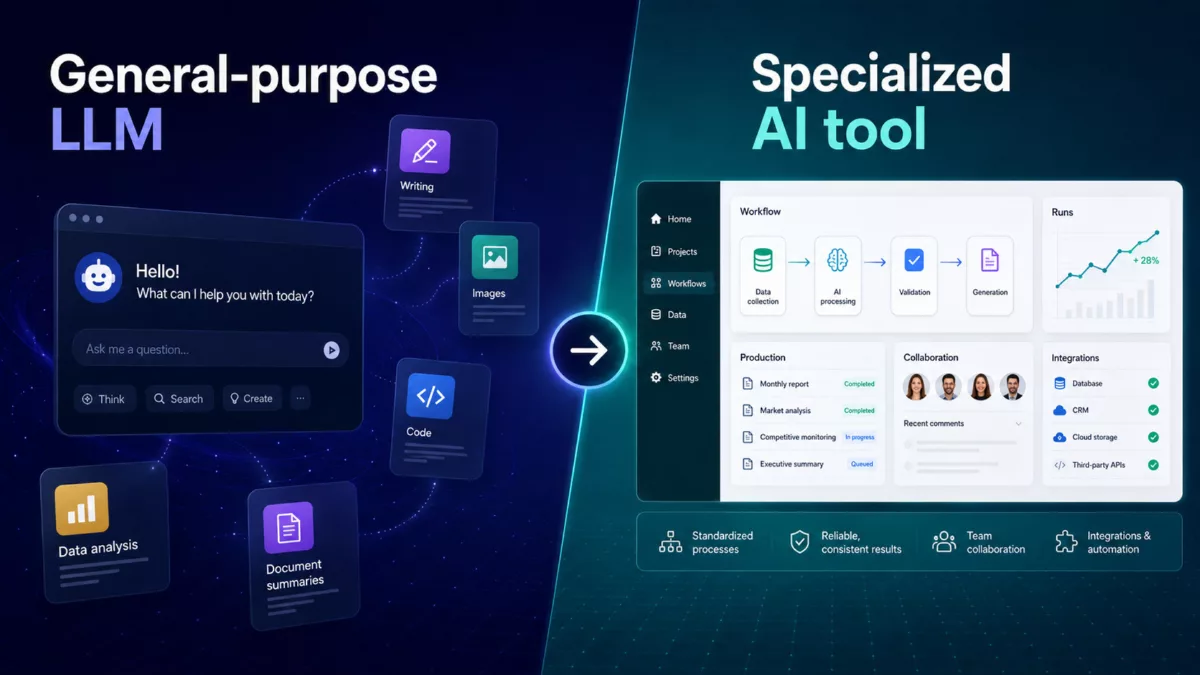
In many cases, the answer is yes. A general-purpose artificial intelligence model like ChatGPT, Claude, or Gemini handles the first half of the work very well: understanding a need, exploring options, producing a first result. The switch to a specialized tool does not happen when the task gets hard, but when that result has to become repeatable, consistent, shared, or connected. In other words: the LLM produces a result, the specialized tool produces a system.
What Your LLM Already Does on Its Own
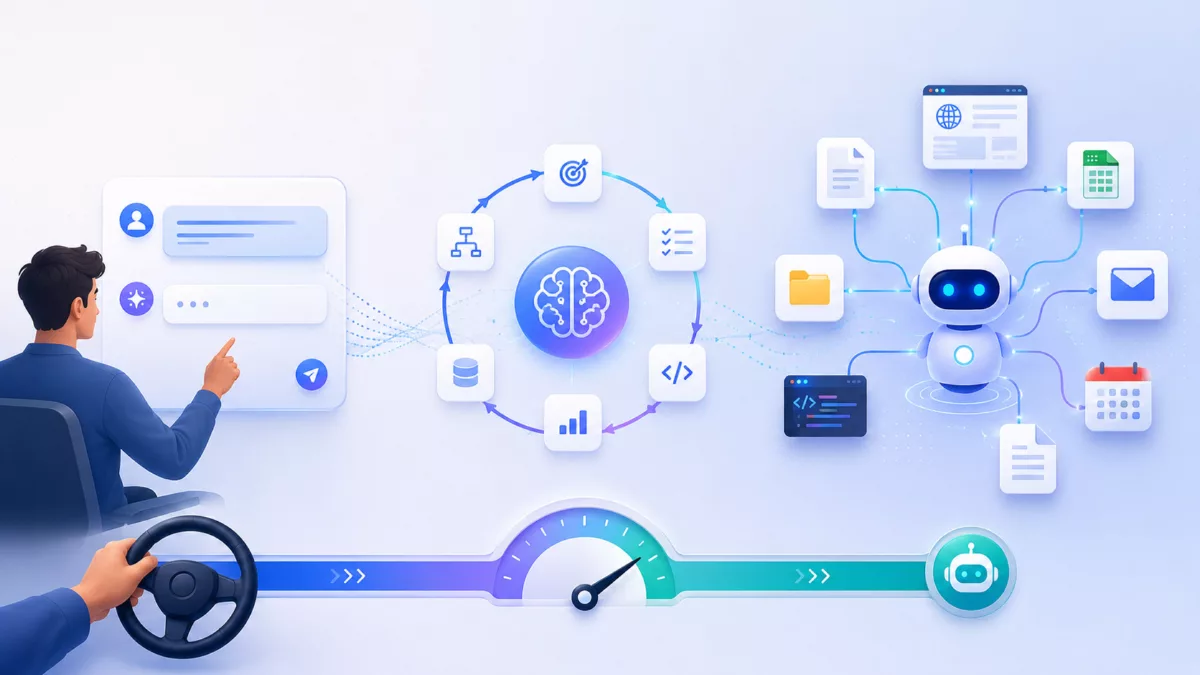
Many people treat their LLM like a slightly chatty search engine and miss the point. A recent model reads a PDF or a spreadsheet and pulls out what matters, searches and synthesizes up-to-date information, analyzes a data export, generates or edits an image, writes and debugs a snippet of code. All in the same window, with nothing to install.
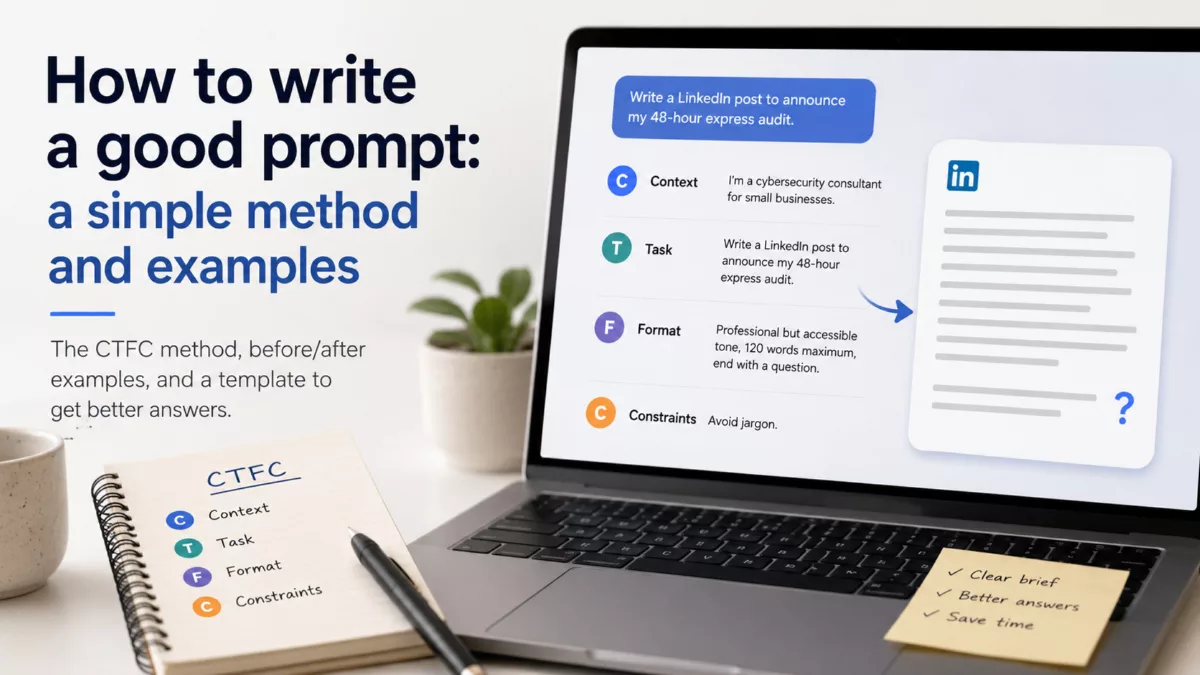
Two habits make the difference between a mediocre result and a usable one: giving context (the real goal, the audience, examples of what you expect) and iterating instead of settling for the first output. No need to turn it into a masterclass on prompting: just remember that quality comes mostly from what you feed the model. Once these habits are in place, you will be surprised how much you no longer need to look for elsewhere.
The Test: Five Signals That Justify a Dedicated AI Tool
How do you know when you have hit the limit? The main criterion is scale, but it is not the only one. A specialized tool becomes relevant as soon as at least one of these signals appears.
| The question to ask | The LLM is enough | A dedicated tool wins |
|---|---|---|
| Is it a one-off? | Yes | No, if it recurs |
| Must it follow a standard? | Manual fixes work | Persistent brand rules needed |
| Are several people involved? | Manual sharing | Collaboration and review |
| Is data or software connected? | One-off import | Continuous integration |
| Do you need volume? | A few pieces | Batch production |
A legal or financial task can be a one-off and still require a domain tool from the start, for its sources and its checks. Conversely, a high-volume but simple task can happily stay inside an LLM.
Four Concrete Cases, From LLM to Specialized Tool
Image and design. I created my LinkedIn banners directly in ChatGPT, and the result was more than good enough. When I wanted to adapt them to other formats, I did not go looking for a tool: I simply reprompted, and it did the job just fine. The tipping point is elsewhere. Picture yourself producing every asset for fifteen different brands, each with its own guidelines, formats, and palette, as an agency. Reprompting by hand becomes unmanageable, and consistency across brands and formats slips away. That is where specialized image and design tools take over. Recraft handles brand styles and vector assets, Photoroom takes care of cutouts and batch product visuals. The LLM explores and produces one at a time, the tool industrializes at scale.
Writing and content. For an email, a post, or a first draft of an article, an LLM does the job nicely. The limit shows up with the brand: keeping a consistent tone across hundreds of pieces, respecting a vocabulary, managing personas, optimizing for search, and publishing into a structured flow. That is where writing and content tools take over, starting with a platform like Jasper, built for exactly this.
Development. The LLM writes a script, fixes a bug, produces a working prototype in minutes. Then the prototype grows. Managing a repository, tracking changes, and keeping context across a real project goes beyond what a simple conversation can offer. An AI-assisted development environment becomes necessary.
Data. Analyzing a CSV export once, the LLM does without trouble. But as soon as you need a metric updated every week, with the same rules and a history to keep, you need a data analysis tool that connects to the source and reruns the processing automatically.
When to Stay on Your LLM, When to Move to a Dedicated Tool
Stay in your LLM to explore, test, and produce one-off. Move to a specialized tool to repeat, standardize, connect, or collaborate.
And before you take out a new subscription, check one last option: a project, a custom assistant, or a light automation set up inside your LLM can sometimes close the gap without adding anything to your stack.
Your LLM Is a Doorway, Not a Destination
An LLM reveals a need and gives you the first half of the answer: it is often the best way to discover what artificial intelligence can actually do for you. For the second half, the one where the result has to become a system, the dedicated tool takes over. The rest is a matter of selection: browse the tool categories and keep a short stack, chosen at the right moment rather than piled up.